
Lighting churches—particularly historic or protected buildings—requires a careful balance of conservation, functionality, and atmosphere. These are complex spaces: architecturally significant, used in multiple ways, and often constrained by ageing infrastructure. A successful lighting scheme respects the building’s character while delivering clear, flexible illumination for modern use.
This guide draws on practical experience from projects across Ireland, including work by Wink Lighting on architectural and heritage projects.
This guide outlines the key considerations in church lighting design, with a focus on historic buildings and conservation projects in Ireland, and how thoughtful design can improve usability, reduce maintenance, and enhance the experience

Rock of Cashel
Understanding the context: heritage, use, and constraints
Many churches have evolved over decades or centuries. As a result, existing lighting installations are often:
- Outdated and inefficient
- Difficult to maintain (especially at height)
- Poorly aligned with current needs
At the same time, interventions are typically limited by conservation requirements. Alterations to fabric, routing of new wiring, or changes to visible elements must be handled sensitively.
The starting point is always the same: understand how the building is used today, and how it needs to function across services, events, and seasons
- How lighting can enhance architecture without overpowering it
- Good church lighting reveals the architecture rather than competing with it.
Key principles:
- Work with the building’s form: emphasise vaults, arches, columns, and rhyth
- Use contrast carefully: avoid flat, over-lit spaces; allow areas of shadow
- Prioritise visual hierarchy: guide attention to focal points (e.g., altar, lectern)
- Keep fittings discreet: integrate into existing elements where possible
Features such as stained glass, carved stone, or decorative ceilings benefit from targeted, low-glare accent lighting. The aim is clarity and legibility—so the space reads well—without turning the lighting into the dominant feature.
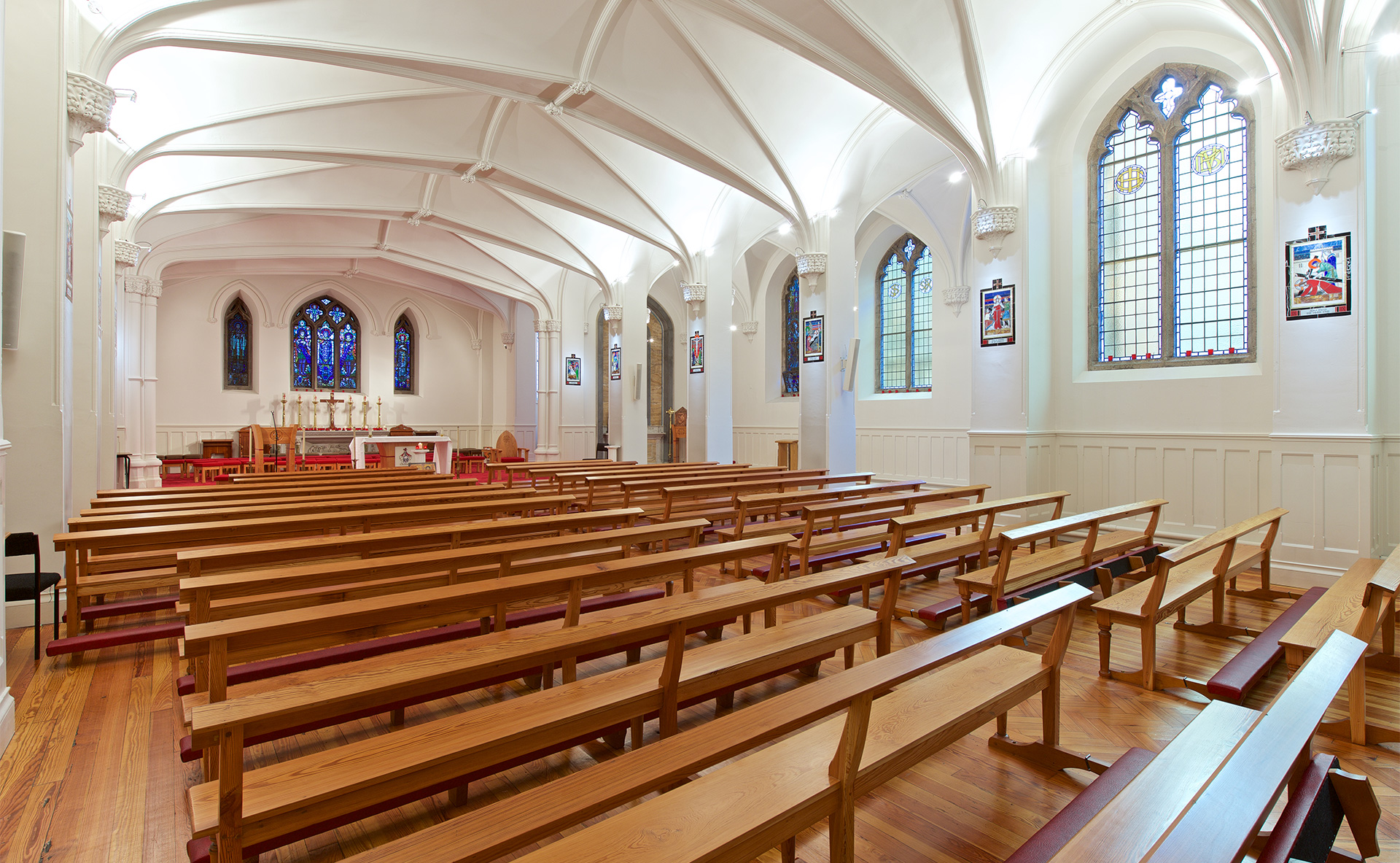
Belvedere Chapel
Core challenges in lighting historic or listed churches
1) Limited intervention
Protected structures restrict physical changes. Surface-mounted routes, visible containment, or invasive works may not be acceptable.
Approach:
- Use existing routes where possible
- Select compact, discreet fittings
- Minimise new penetrations and alterations
2) Ageing wiring and infrastructure
Older systems can be unreliable and expensive to upgrade fully.
Approach:
- Phase upgrades where needed
- Introduce wireless control systems (e.g., Bluetooth-based) to reduce rewiring
- Separate controls from power circuits to improve flexibilitY
3) Height and access
High ceilings make maintenance difficult and costly.
Approach:
- Specify long-life LED fittings to reduce relamping
- Use accessible mounting locations where possible
- Design for low maintenance cycles from the outset
4) Mixed and evolving use
Churches are used for regular services, ceremonies, concerts, and community events.
Approach:
- Design layered lighting (ambient, task, accent)
- Implement scene-based controls for quick changes
- Allow for future adaptation without major rework
Balancing liturgical, functional, and atmospheric needs
A single lighting scheme must support multiple modes:
- Liturgical: clear focus on altar, lectern, and ceremonial areas
- Functional: safe, even illumination for circulation and general use
- Atmospheric: softer, more intimate settings for evening services or events
A practical layered approach
Ambient lighting
Provides overall illumination. Typically indirect or soft direct light to avoid glare and maintain a calm base level.
Task lighting
Focused light where activities occur (reading, music, circulation routes).
Accent lighting
Highlights key features—altar, artwork, architectural details—creating depth and focus.
Controls and flexibility
Scene-setting is essential. For example:
- Daytime service: balanced ambient + focused altar lighting
- Evening service: reduced ambient, warmer tones, stronger focal emphasis
- Christening: additional focus on the font
- Candlelight service: low ambient levels with controlled highlights
- Modern control systems allow these scenes to be pre-set and easily recalled.
Treating the altar as a focal point
In most schemes, the altar functions as the visual and ceremonial centre. Lighting it effectively is similar to stage lighting:
- Ensure clear visibility for congregation and clergy
- Maintain good facial modelling (avoid harsh shadows)
- Control glare from key viewpoints
- Balance with surrounding light so it reads as the focal point
- Highlighting key architectural features
Churches often contain elements that benefit from careful emphasis:
- Stained glass windows
- Decorative ceilings and vaults
- Stonework, columns, and arches
- Artwork and historic fittings
Accent lighting should be precise, with controlled beam angles and minimal spill. The goal is to draw attention without overwhelming the space.
Energy efficiency and long-term performance
Upgrading to LED technology is typically the single biggest improvement:
- Lower energy consumption
- Longer lifespan
- Reduced maintenance
Controls further enhance efficiency through dimming, zoning, and scheduling.
The role of wireless (Bluetooth) control systems
In conservation contexts, reducing physical intervention is critical. Bluetooth-based lighting control can:
- Minimise new wiring
- Allow flexible reconfiguration
- Simplify commissioning
- Reduce disruption
Designing for adaptability over time
Church buildings evolve. Lighting should:
- Support different uses
- Be easy to adjust
- Allow future upgrades
Experience and specialist knowledge
Experience across multiple ecclesiastical projects—delivered by Wink Lighting—ranging from historic sites such as the Rock of Cashel to larger modern buildings like the Knock Basilica, as well as smaller parish churches and chapels—helps inform a practical and sensitive approach to lighting design.
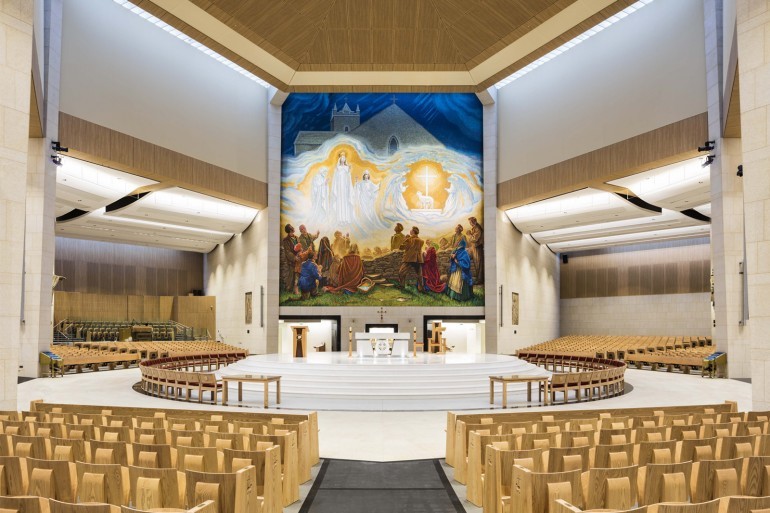
Knock Basilica
Final thought
Lighting a church is not just about visibility. It’s about supporting the architecture, enabling different uses, and creating atmosphere—while respecting the history of the building.
Done well, it enhances how the space is experienced, both functionally and emotionally, over the long term.
