
A Guide to Heritage & Conservation Lighting

The Principles of Heritage & Conservation Lighting
Lighting historic and protected structures requires a careful and considered approach. The objective is not simply to illuminate a building or space, but to reveal its architectural character while preserving its integrity, atmosphere, and historical significance.
Whether the project involves a landmark façade, a historic streetscape, or a protected interior, every heritage and conservation lighting scheme should respond sensitively to both the architecture and its wider context. At Wink Lighting, we have extensive experience delivering conservation lighting schemes for protected structures, heritage buildings, monuments, and historic interiors throughout Ireland.
Key considerations include:
The historical significance of the structure
– The surrounding environment and context
– Viewing angles and sightlines
– The impact of glare and light spill
– Fixture integration and minimal visual intrusion
– Long-term maintenance and energy performance
– The preservation of original architectural features and materials
Within heritage interiors, conservation lighting often plays an important role in enhancing atmosphere, highlighting craftsmanship, improving usability, and supporting adaptive reuse — while ensuring that interventions remain discreet and sympathetic to the building fabric.
Externally, architectural and conservation lighting can strengthen the identity and presence of heritage buildings within the night-time environment while carefully balancing visibility, conservation, and environmental considerations.
At Wink Lighting, our approach to heritage and conservation lighting focuses on creating subtle, timeless lighting schemes that enhance architectural character without overpowering the structure or surrounding environment.
Where possible, lighting interventions should remain visually discreet during daylight hours and avoid unnecessary impact on the historic structure.
Conservation guidelines, including UNESCO recommendations and local heritage requirements, should always inform the lighting design strategy.
The most successful heritage and conservation lighting schemes allow buildings to sit naturally within their environment — enhancing character and legibility without over-lighting or theatrical effects.
Smart Lighting Control with Casambi Bluetooth
Many of our heritage and conservation lighting projects utilise Casambi Bluetooth lighting control technology, providing flexibility, scalability, and ease of maintenance without the need for extensive control cabling.
Wireless lighting control systems are particularly advantageous within protected structures, where minimising intervention to historic fabric is a key consideration.
Wink Lighting is the official sales partner of Casambi in the Republic of Ireland, providing advanced wireless lighting control solutions for heritage, architectural, hospitality, and conservation lighting projects throughout Ireland.
Benefits of Casambi Control
– Wireless lighting control
– Remote access and commissioning
– Scene setting and dimming
– Timed events and scheduling
– Reduced installation complexity
– Simplified future adjustments
– Energy optimisation
The ability to remotely manage and adjust lighting scenes also allows heritage buildings and interiors to adapt for events, exhibitions, seasonal changes, and special occasions while maintaining energy efficiency and long-term flexibility.
At Wink Lighting, we have found that intelligent wireless lighting control systems are particularly effective for conservation lighting projects, where flexibility, minimal intervention, and long-term maintainability are essential considerations.
Project Spotlight: Kilternan Parish Church
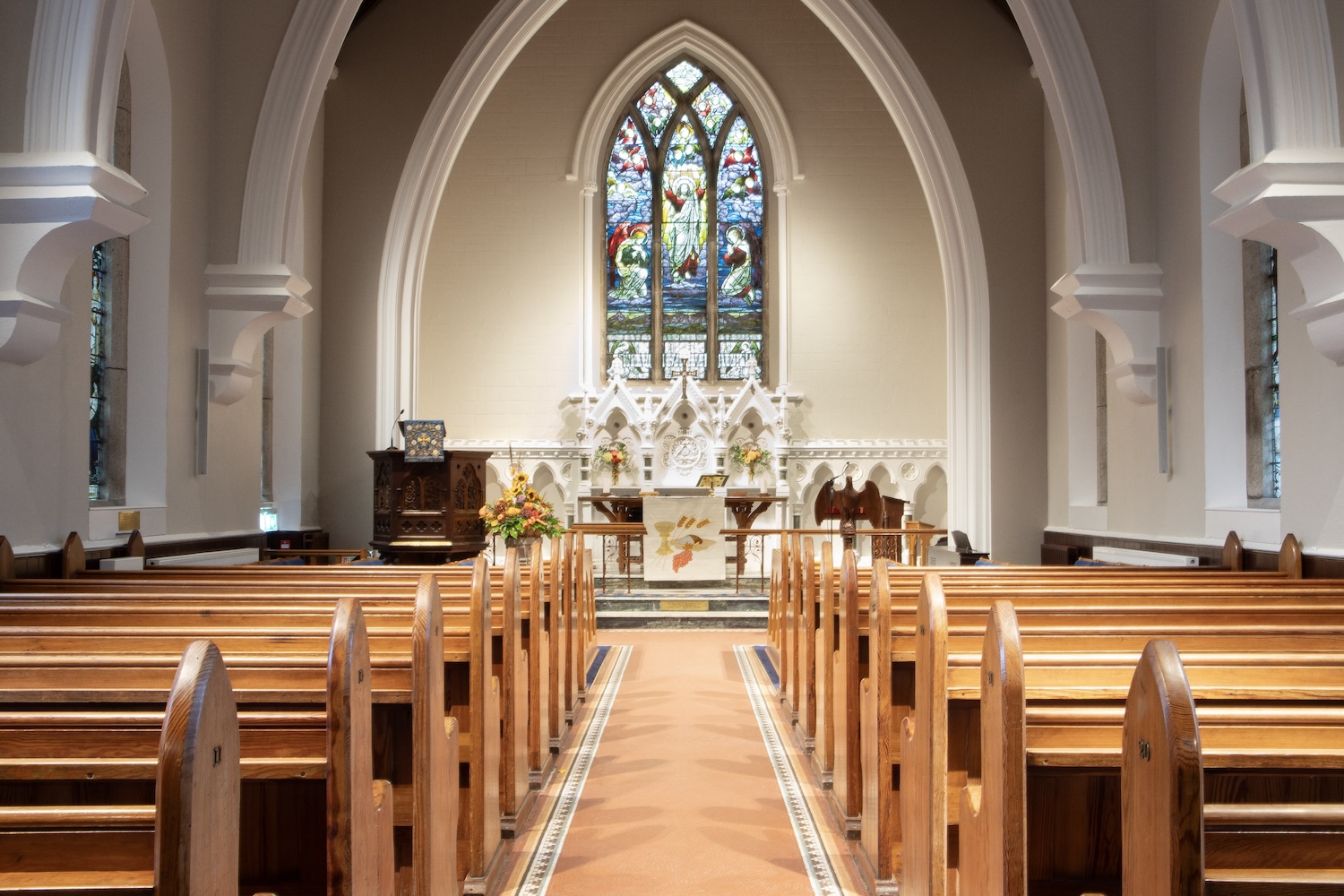
Kilternan Parish Church Photo: @aurorastudios
Kilternan Parish Church required a carefully considered interior lighting upgrade that would create a warm, comfortable environment while naturally drawing attention to the altar and speaker.
Wink Lighting designed a scheme using precisely aimed fittings and controlled beam angles to eliminate glare and ensure even illumination throughout the church. Higher, more focused light levels were introduced within the altar, pulpit, and chancel areas to support worship and enhance visual clarity.
Flexibility formed an important part of the design. Using Casambi Bluetooth lighting control, the parish can easily adjust lighting scenes for everyday services, seasonal celebrations, and special occasions. Preset colour scenes reflecting the liturgical calendar were also incorporated, allowing the lighting to respond sensitively to different times of the church year.
The result is a comfortable, adaptable, and conservation-sensitive lighting scheme that supports both worship and the architectural character of the space.
Project Spotlight: Rock of Cashel
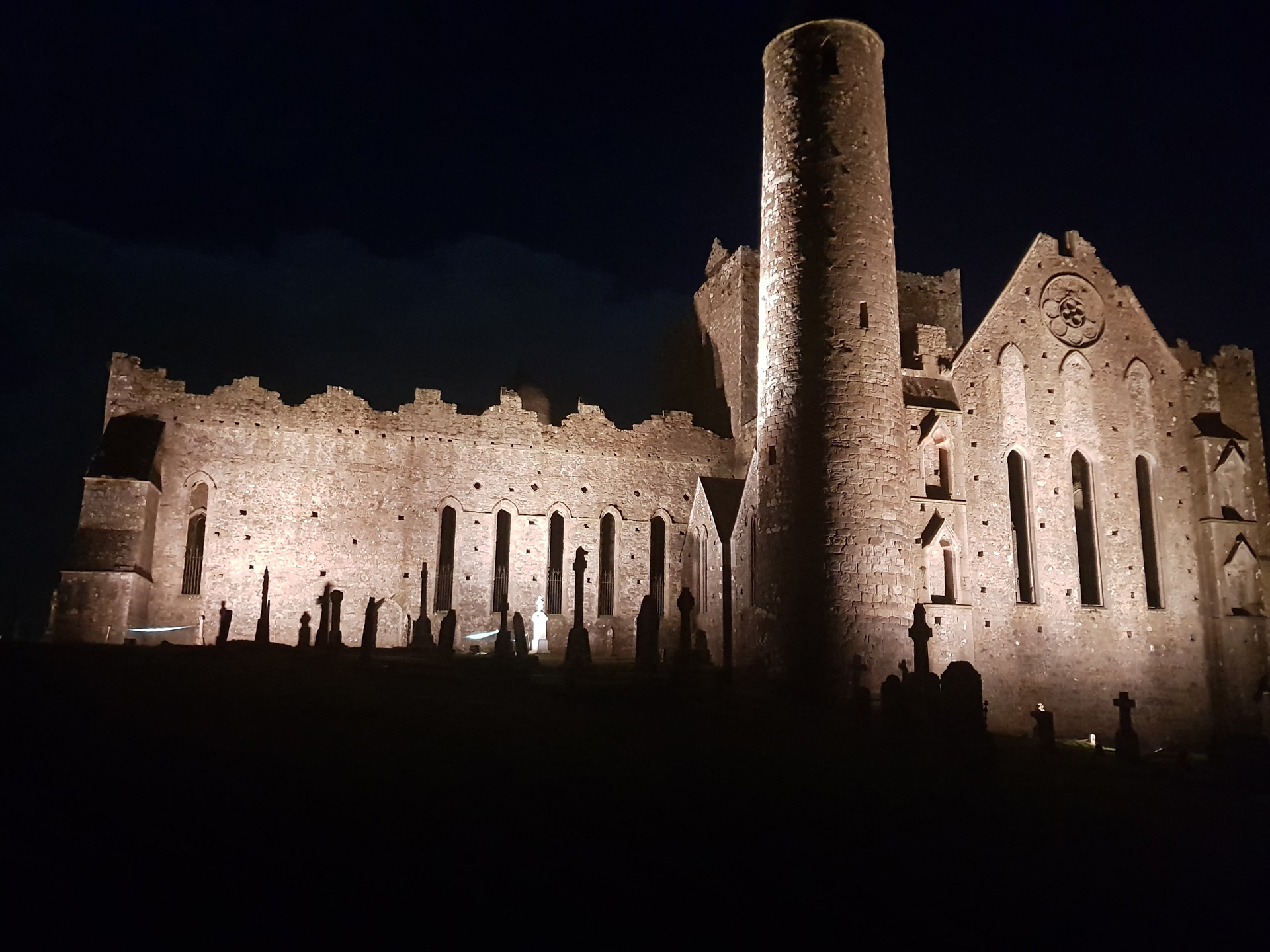
The Rock of Cashel is one of Ireland’s most recognisable heritage landmarks, and Wink was proud to deliver the conservation lighting design and product supply for the site in collaboration with the Office of Public Works.
Project Spotlight: Terryland Castle

Terryland Castle presented a unique conservation lighting challenge due to its close proximity to a major roadway.
A key consideration during the design process was ensuring that the lighting installation would not create distraction or glare for passing motorists. Careful attention was given to beam angles, fixture positioning, and optical control to ensure the scheme remained both visually effective and environmentally sensitive.
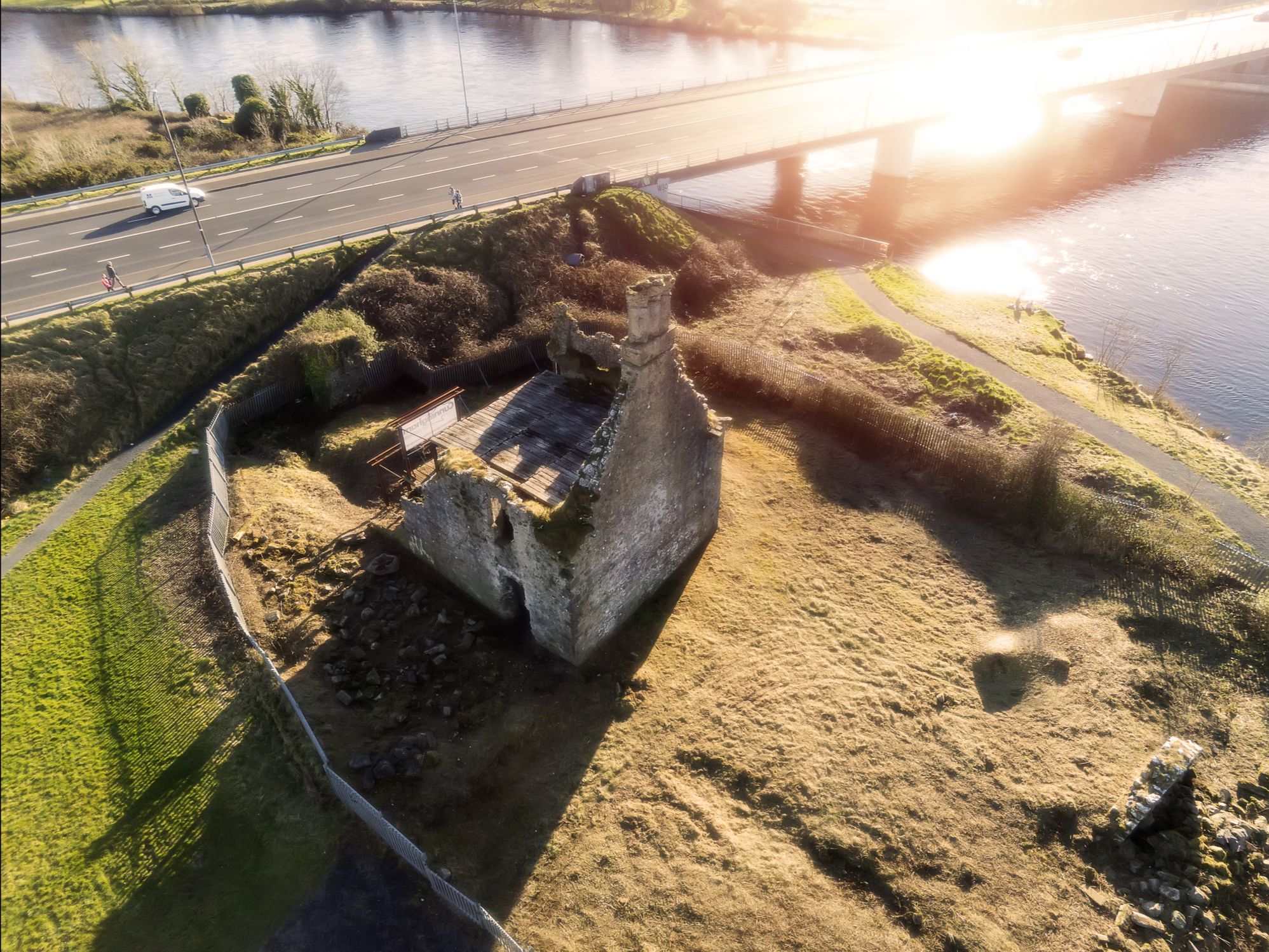
To mitigate glare, anti-glare baffles and precisely selected optics were incorporated into the design. This allowed the castle to be effectively illuminated while maintaining visual comfort and road safety.
By integrating Casambi control technology, lighting scenes could also be remotely adjusted and fine-tuned without requiring repeated on-site intervention — reducing maintenance requirements and providing greater flexibility over time.
The result is a subtle yet impactful heritage lighting scheme that enhances the presence of the castle within the landscape while remaining sensitive to its surroundings.
Project Spotlight: Round Tower Clones

Round Tower Clones is an important early medieval structure dating back to the 10th century and remains one of the defining historic landmarks within the town.
Wink was commissioned to develop a conservation lighting scheme that would sensitively transform the tower into a striking night-time focal point while preserving the atmosphere and historical character of its setting.
Located within a historic graveyard, the tower required a highly considered approach to lighting placement, glare control, and visual balance. The design needed to respect both the architectural significance of the structure and the tranquillity of the surrounding environment.
The lighting strategy focused on revealing the verticality, stone texture, and elegant proportions of the tower through carefully controlled illumination. By selectively highlighting architectural features rather than flooding the structure with light, the tower maintains a dignified and timeless presence after dark.
As with many heritage lighting projects, careful integration of fittings and minimal visual intrusion during daylight hours formed an important part of the overall design approach.
Urban Lighting & Cultural Identity
Over the past two decades, urban lighting has evolved far beyond functional illumination. Cities increasingly recognise the role lighting can play in shaping cultural identity, enhancing public spaces, improving safety, and supporting tourism.
This movement led to the creation of LUCI — an international network of cities and lighting professionals focused on sustainable urban lighting strategies and the thoughtful use of light within the public realm.
Founded by the cities of Lyon and Glasgow, the organisation now includes hundreds of member cities worldwide, with Galway representing Ireland within the network.
LUCI promotes a collaborative and sustainable approach to urban and conservation lighting, encouraging cities and designers to create environments that are memorable, culturally engaging, and socially beneficial.
Wink Lighting is proud to be a committed member of LUCI, supporting its vision for responsible and meaningful lighting design within urban and heritage settings.
Key Principles for Lighting Heritage Buildings
Respect the Architecture
Lighting should enhance architectural form, materiality, and craftsmanship without overpowering the structure. The aim is to complement the character of the building rather than compete with it.
Minimise Glare
Careful fixture selection, positioning, and aiming are essential to maintain visual comfort and reduce unwanted glare or light spill within the surrounding environment.
Keep Interventions Discreet
Fixtures, cabling, and mounting details should remain as visually unobtrusive as possible, particularly within protected interiors and historically sensitive settings.
Use Light Selectively
The most effective heritage and conservation lighting schemes use light with restraint — drawing attention to significant architectural features, textures, and details rather than uniformly illuminating every surface.
Prioritise Flexibility
Intelligent lighting controls allow buildings and spaces to adapt over time, supporting events, exhibitions, seasonal changes, and evolving building use while maintaining energy efficiency.
Consider Long-Term Maintenance
Accessibility, durability, serviceability, and energy performance should all form part of the design strategy from the outset, ensuring the scheme remains sustainable and effective over time.
Frequently Asked Questions About Conservation Lighting
What is conservation lighting?
Conservation lighting is the careful illumination of heritage buildings, protected structures, monuments, and historic interiors in a way that enhances visibility and atmosphere while respecting the architectural and historical integrity of the structure.
What should be considered when lighting a protected structure?
Key considerations include:
– minimising intervention to historic fabric
– glare control
– discreet fixture integration
– energy efficiency
– long-term maintenance
– conservation guidelines
– appropriate colour temperature
– environmental impact
Why is wireless lighting control useful in heritage buildings?
Wireless lighting control systems such as Casambi reduce the need for intrusive control cabling within protected structures, helping preserve historic fabric while providing flexibility, remote access, and energy optimisation.
What colour temperature works best for heritage buildings?
Warm white lighting is often preferred for historic stone structures because it enhances texture and material richness. Cooler colour temperatures can also be used selectively to create contrast or support specific architectural effects.
How do you minimise glare in conservation lighting?
Glare can be reduced through careful fixture positioning, beam angle selection, shielding accessories, and precise optical control to ensure visual comfort and minimise light spill.
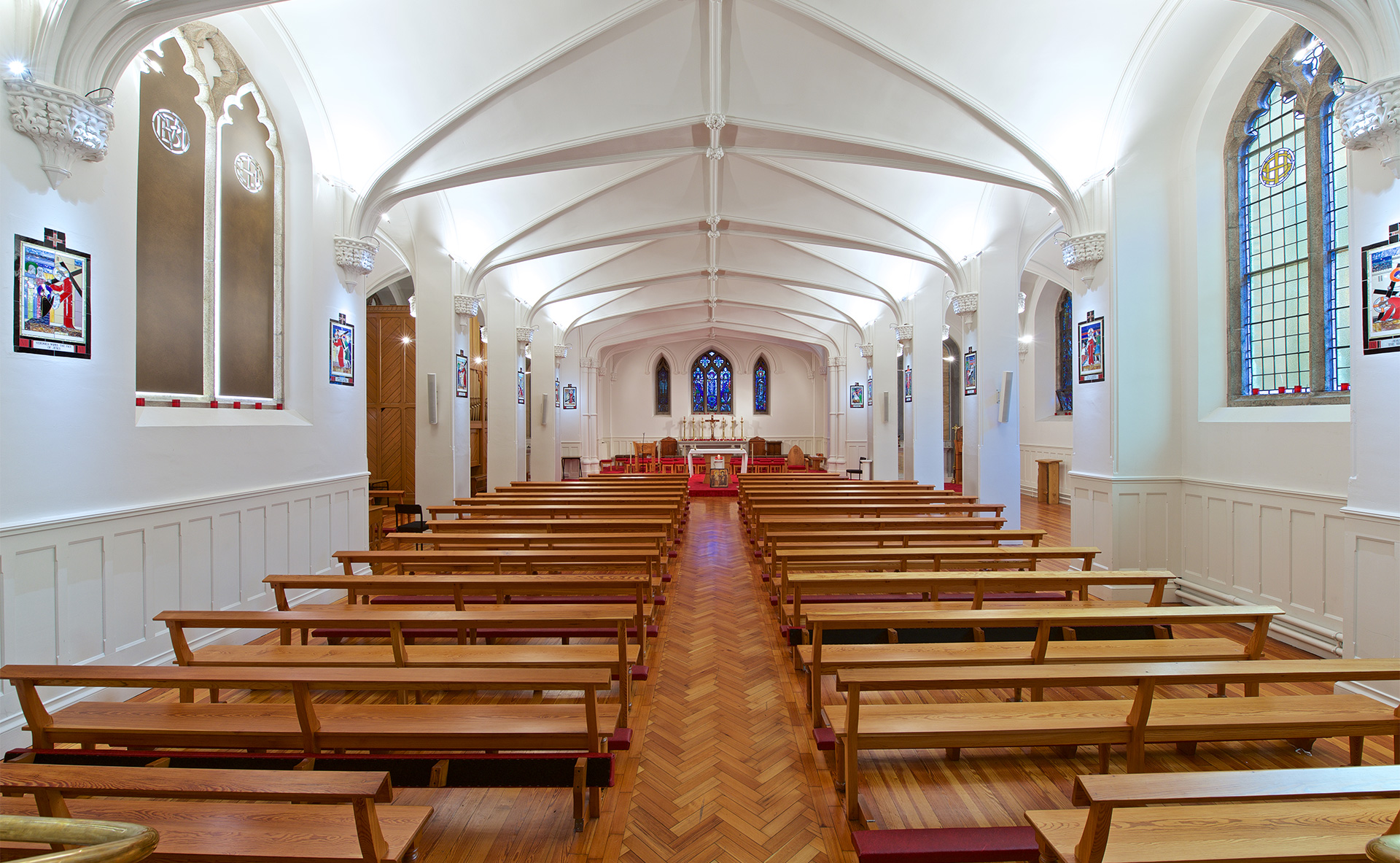
Belvedere Chapel
Conclusion
Lighting has the power to transform heritage buildings and historic interiors — revealing texture, form, craftsmanship, and history in ways that are both subtle and memorable.
When approached thoughtfully, conservation lighting can enhance public appreciation of protected structures while respecting the principles that safeguard them for future generations.
Successful heritage lighting is never simply about visibility or effect. It is about understanding the architecture, respecting the historic fabric, and creating a sensitive balance between preservation and contemporary use.
At Wink, we believe the most successful heritage and conservation lighting schemes are those that combine restraint, technical expertise, and sensitivity to place — creating environments that honour the past while supporting the evolving needs of the present.
