
The choice of colour temperature for street lighting has become a topic of debate in recent times. With the shift towards LED technology, street lighting has transitioned to a whiter light, departing from the traditional orange or amber hues. The traditional warm lighting had a calming effect and was conducive to the activities of nocturnal animals. However, the introduction of white light in street lighting has had an adverse impact on these creatures.
 \
\
The Campshire, Docklands
The shift to LED street lighting, while offering advantages such as energy efficiency and longer lifespan, has raised concerns regarding its effects on the natural ecosystem. Nocturnal animals, which rely on darkness and the specific colour temperature of traditional lighting, are being affected by the introduction of white light. This change disrupts their natural patterns and can have unintended consequences on their behaviour and well-being.
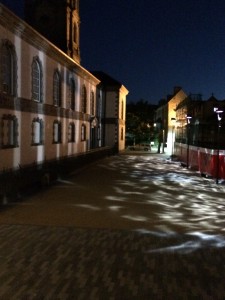
Waterford Viking Triangle
As discussions continue regarding street lighting choices, striking a balance between energy efficiency and preserving the ecological balance is crucial. Efforts are underway to explore solutions that address both human needs and the well-being of nocturnal animals, ensuring that the impact of street lighting aligns with the surrounding environment.
