

Congratulations to Conor O’Byrne on becoming a WELL AP (Accredited Professional)
As a WELL AP at Wink, Conor can provide design services to meet the requirements of the WELL light feature including the required letter of assurance and technical documentation. If you are pursuing WELL on your project or are interested to learn more about WELL get in touch with Conor at conor@wink.ie
Interview with Conor, our new WELL AP
What does it mean when a building is WELL accredited
WELL is a building standard which facilitates improvement to the health and well-being of the people who use the building. Light is one of the focus areas of the standard and it offers nine ways to improve those users’ health and well-being using light.
In terms of lighting, how is a building WELL accredited?
Light is hugely important to human health as it is the main driver of the circadian system. The circadian system is the 24 hour cycle of sleep and wakefulness which is synchronized mainly by light as received by the eyes and which regulates operation of many organs and tissues within the body. Disruption of the circadian cycle can be caused by insufficient exposure to light during the day and can actually have serious health consequences.
How can Wink help in meeting the Artificial Lighting requirement?
Where Wink can help is with the option to meet the requirement using artificial light. This is done by meeting certain levels of what is called EML (or equivalent melanopic lux) for at least four hours around noon. Certain wavelengths of light better stimulate the circadian system and EML is a measurement of how much of these wavelengths are present in the light supplied. We can perform these calculations and specify luminaires which meet the required levels in the space.
How important is maximising daylight to WELL accreditation?
Meeting certain levels of daylight exposure is a requirement for a building to be awarded a WELL certification. High daylight exposure during the day is an important way in which the circadian rhythm is synchronised. There are a few ways to meet this requirement which focus on size and proximity of windows to the workspace.
What is recommended in terms of lighting?
Current lighting codes and guidelines provide illuminance recommendations for different room types and for typical activities per room. These standards ensure good visual acuity in a variety of tasks to avoid eyestrain and to minimise productivity losses and headaches.
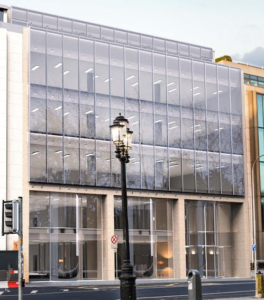
Could you give an examples of a building conforming to the WELL Standard?
We worked with Wejchert Architects on an office at St Stephen’s Green in the city centre where the project had to conform to the WELL standard. This building is the first building where even the demolition had to conform to the WELL accreditation in terms of how to manage the dust and extractions and with a plan to reuse some of the rubble and conserve materials.
